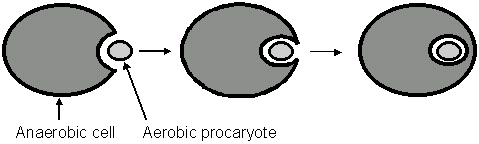
THE ENDOSYMBIOTIC THEORY: This theory explains the origin of mitochondria and chloroplasts. ENDOCYTOSIS: When a substance gains entry within a cell without passing through the cells membrane which then forms the membrane in a way that holds the foreign substance within the membrane of a cell. This concept states that mitochondria and chloroplasts were formed through the process of endocytosis bacteria and blue-green algae 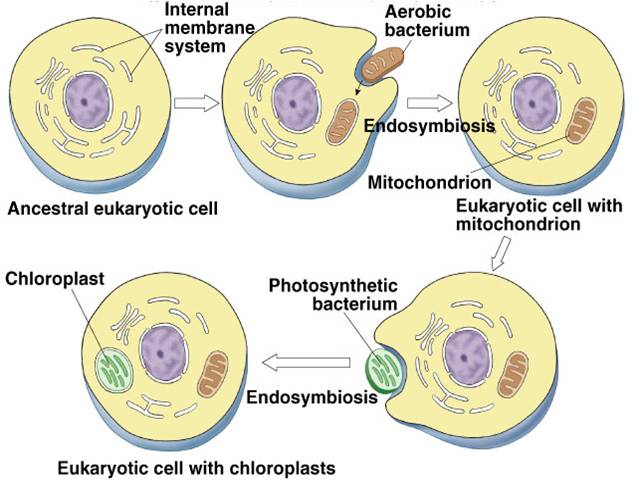 SPECIALIZATION AND ORGANIZATION OF CELLS: Multicellular organisms contain specialized cells and each one contributes to homeostasis. Specialized Animal Cells: Keeps our lungs clean from mucus, dust, smoke, bacteria, and a lot of other bad stuff. These cells are active cleaning the line of the upper air passage (where the oxygen you breathe in is taken) 24/7. These cells have many mitochondria to help produce a bunch of ATP to power the cilia on their upper surfaces that helps to keep our lungs clean. Specialized Plant Cells: These help by releasing pollen grains which land to create a new plant. Although they do not have a tough cell membrane they have these very tiny wings attached to them that lets them float in even just a slight breeze. They then float away and eventually land on seed cones that eventually create a new tree flower or any other type of plant. |
   ORGANIZATION: There are three different levels of organization; first is tissue (smallest), then it's organ (middle), and finally organ system (largest). Tissue: A group of similar cells that perform a similar function. Organ: Group of tissues that are held together that perform a closely related function. Organ System: Group of organs that work together to perform a specific function. |
